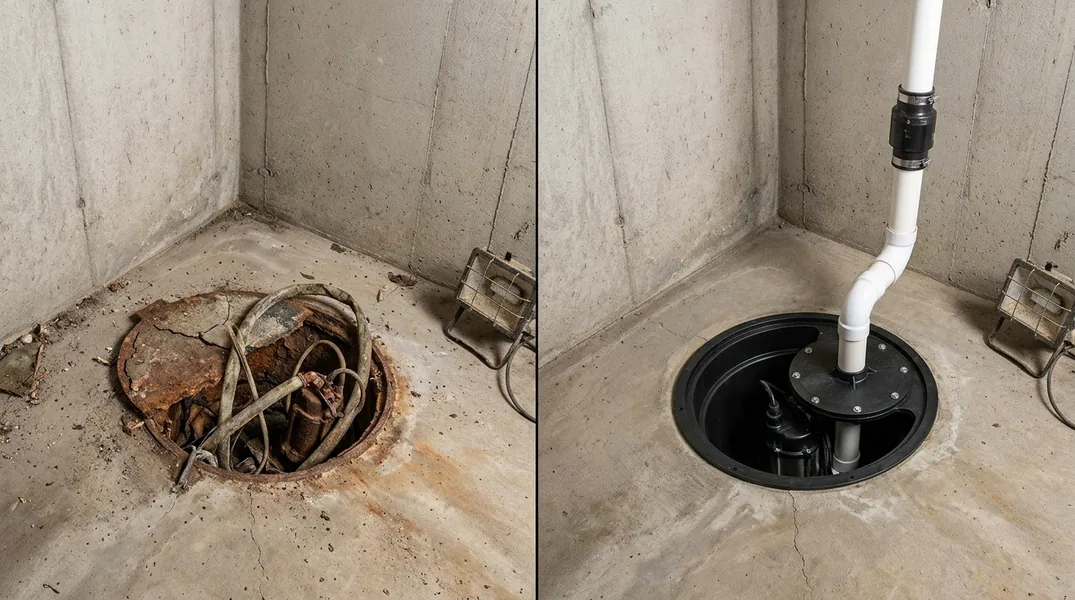
Why Sump Pump Maintenance Matters Before Spring Storms
Spring in Northeast Tennessee brings heavy rain, saturated soil, and rising water tables. For homeowners in Johnson City, that means your sump pump shifts from occasional duty to round-the-clock operation. A pump that sat idle all winter can fail when you need it most, leaving your basement vulnerable to flooding. Regular sump pump maintenance is the simplest way to avoid that nightmare.
Think of your sump pump like your car: it runs fine until it doesn't, and neglect is usually the culprit. Debris in the pit, a stuck float switch, or a worn check valve can turn a working pump into a useless appliance in minutes. Before the wet season arrives, invest a little time in inspection and testing. If you're not comfortable doing it yourself, a professional Basement Waterproofing contractor can handle the job and spot problems early.
Step-by-Step Sump Pump Maintenance Checklist
Start by unplugging the pump for safety, then remove the lid and inspect the sump pit. Look for mud, gravel, or debris that could clog the intake. Clean the pit thoroughly and make sure the pump sits level on a solid surface. Next, check the float switch by lifting it manually to confirm the pump kicks on and off smoothly. If the float sticks or the pump doesn't respond, replace the switch before the rainy season.
Test the discharge line by pouring a bucket of water into the pit and watching how quickly the pump removes it. Slow drainage often points to a clogged line or a failing impeller. While you're at it, inspect the Interior Drain Tile System that feeds the pit, clearing any sediment buildup. Finally, check the power cord and outlet for damage, and consider installing a battery backup sump pump if you don't already have one. A backup system keeps your basement dry during power outages, which are common in spring thunderstorms.
The Sump Pump Check Valve: A Small Part That Prevents Big Problems
The sump pump check valve is a one-way gate that stops water from flowing back into your pit after the pump shuts off. Without a functioning check valve, every cycle sends water back down the discharge line, forcing the pump to work harder and run more often. That extra strain shortens the pump's lifespan and can lead to premature failure. During your maintenance routine, listen for a thumping sound after the pump stops, which often indicates a bad valve.
Replacing a check valve is inexpensive and straightforward, but it's easy to overlook. Make sure the valve is installed in the correct orientation and that the rubber flapper seals tightly. If you notice water trickling back into the pit after each cycle, the valve needs attention. Homeowners in Jonesborough and surrounding areas can ask a waterproofing technician to inspect the valve during a routine service visit. A healthy check valve means less wear on your pump and a drier basement all season.
Battery Backup Sump Pump: Your Safety Net During Spring Storms
Spring storms in Northeast Tennessee frequently knock out power, and a sump pump without backup is useless when the electricity goes out. A battery backup sump pump runs on a charged battery and automatically takes over when the primary pump fails or power is lost. This is especially important if your basement is finished or stores valuable belongings. Even a short outage during a heavy rain event can lead to inches of water on your floor.
Test your backup system monthly by simulating a power failure and confirming the backup pump activates. Check the battery water level (if applicable) and terminals for corrosion, and replace the battery every three to five years. If you don't have a backup yet, consider it a priority before storm season. A professional can help you choose the right capacity for your pit and ensure proper installation. For homeowners in Elizabethton, adding a backup pump is one of the best investments you can make in basement protection.
Sump Pit Care and When to Call a Pro Near Me
Your sump pit is the heart of your drainage system, so keep it clean and covered. A tight lid prevents debris, insects, and humidity from entering the pit, and it also improves safety by keeping children and pets out. Periodically vacuum the pit and remove any silt that settles at the bottom. If your pit is too small or fills too quickly during storms, you may need a larger basin or a second pump. These upgrades are best handled by a professional who understands local soil and water conditions.
If you're searching for sump pump maintenance near me in Johnson City, look for a company that offers thorough inspections and honest recommendations. Signs you need professional help include strange noises, frequent cycling, visible rust, or a pump that runs constantly. Don't wait for a flood to find out your system is failing. Call Johnson City Waterproofing at (423) 427-2632 or request a free estimate to schedule your pre-season sump pump check. A little prevention now saves thousands in water damage later.
Looking for a professional basement waterproofing contractor in Johnson City? Johnson City Waterproofing responds fast for all your basement waterproofing needs.
Get a Free QuoteOur services: Basement Waterproofing · Interior Drain Tile System · Exterior Basement Waterproofing