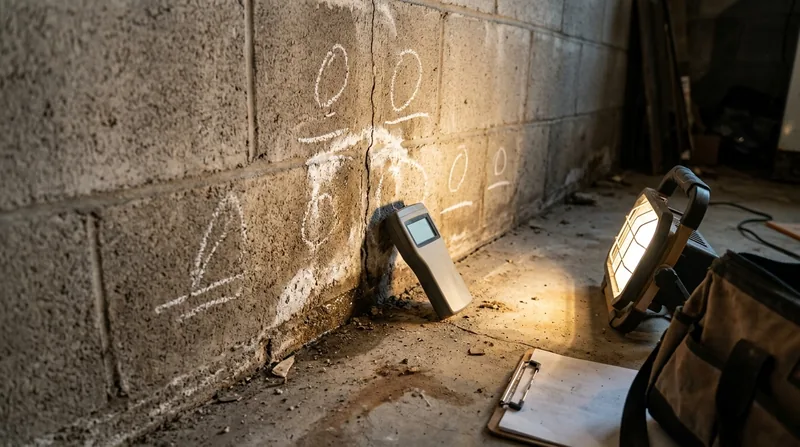




Free Basement Inspection in Johnson City: Start With the Water, Not the Sales Pitch
Johnson City sits on limestone bedrock, and that single fact drives most of the wet basements we see. Water moves through open seams and springs in the karst, then stalls on the thin clay cover over the flat lots around the Tree Streets and Downtown. In the older brick and frame houses there, stone and early block foundations leak at the low corners first. Out along State of Franklin Road and University Parkway, the 1940s to 1960s brick ranches have block walls and partly finished basements that seep after spring storms. Newer walkout basements on the slopes near Boones Creek and Knob Creek collect water at the uphill wall. A Free Basement Inspection in Johnson City tells you which of those problems you actually have before anyone quotes a repair. We check the walls, floor, cracks, sump system, grading, and gutters, take photos, and explain what needs fixing now and what can wait. If nothing is wrong, we say so. Book the visit through our contact page.
Why Johnson City Basements Leak: Karst, Clay, and Old Foundations
The ground here holds water in a way that surprises homeowners who moved from other parts of Tennessee. Limestone below, clay above, and a water table that rises fast during spring storms. That combination builds hydrostatic pressure against the wall, and the water finds the weakest point: a cold joint, a hairline crack, a mortar joint in stone, or the footing itself.
- Stone and early block foundations in the Tree Streets and Keystone flood at the low corner because the footing drain has long since clogged with clay.
- Block walls in 1950s and 1960s ranches along Bristol Highway show efflorescence and horizontal seepage after heavy summer thunderstorms.
- Poured walkout basements on the Boones Creek slopes take water at the uphill wall where grading has settled against the foundation.
- Original weeping tile under 1920s cellars is often crushed, root-filled, or simply gone, so the water has nowhere to go.
An inspection separates a simple crack from a pressure problem, and that difference decides whether you need epoxy injection or an interior perimeter drain.
Key info: A house on a flat lot off Knob Creek Road with a damp low corner is usually dealing with surface water and a dead footing drain, not a structural crack. The same symptom on a sloped lot in Gray often points to a spring feeding the footing. Same wet wall, two different fixes.
For the official word on permits and inspection requirements in the city, the City of Johnson City building department is the authority to check before any structural or drainage work starts.
How Our Johnson City Inspection Works, Step by Step
We walk the basement and the exterior in one visit, and we do it with a moisture meter and a camera, not a clipboard of upsells. The order matters: exterior first, because that is where most water enters, then the interior walls and floor, then the sump and discharge. You get a written explanation the same day, and we tell you plainly when crack sealing is enough and when the real problem is hydrostatic pressure.
- We check grading, downspout extensions, and window wells to see where surface water is being dumped against the foundation.
- We inspect the exterior walls for parging failures, open seams, and signs the waterproof membrane has failed.
- We meter the interior walls and floor, map every crack, and note efflorescence and any musty basement smell.
- We test the sump pump, check valve, and discharge line, and confirm the basin is actually collecting water.
- We photograph everything and write up what needs fixing now, what can wait, and what is fine as is.
If the inspection shows a failing sump system, the next step is usually a sump pump installation with a battery backup, not a full excavation.
Key info: On a 1958 brick ranch off University Parkway, we found the sump basin dry and the discharge line buried and clogged. The pump was fine. The fix was a new discharge line and a regraded swale, not a new pump and not an interior drain.
Inspection Findings and What They Usually Mean
Most inspections end with one of four conclusions, and each one points to a different repair path. We match the finding to the fix, and we do not recommend excavation when an interior system will do the job.
| Approach | Description | Best for |
|---|---|---|
| Visual and moisture-meter walkthrough | Walls, floor, cracks, grading, gutters, and sump system checked with photos. | Every home, first step before any quote. |
| Crack mapping and injection assessment | We measure crack width and movement to decide epoxy versus polyurethane injection. | Hairline and settling cracks in poured and block walls. |
| Sump and drain tile test | Pump run test, check valve inspection, and confirmation the basin receives water. | Homes with an existing sump or a wet floor after rain. |
| Hydrostatic pressure evaluation | We read the seepage pattern to tell pressure from a plain crack. | Walls that weep across the whole face after storms. |
| Structural movement check | We look for bowing, stair-step cracking, and wall movement that needs straps or anchors. | Older stone and block foundations with visible lean. |
Whichever row fits your house, the inspection tells you which repair is honest and which is unnecessary.
Free Basement Inspection Cost in Johnson City: What to Expect
The inspection itself costs nothing, and there is no obligation to book repair work afterward. What varies is the repair, and that number depends on the finding: a single injected crack is a small job, while a full interior perimeter drain with a new sump basin is a larger one. We give you the range in writing so you can compare it against other estimates.
Getting two or three estimates is smart, and we encourage it. Ask each contractor what they found and why their fix matches it. A quote that jumps straight to exterior excavation without explaining the pressure pattern is worth a second look. Our pricing overview shows how the repair figures break down once the inspection is done.
Choosing a Waterproofing Contractor Near Johnson City: What to Check
Basement waterproofing attracts more than its share of high-pressure sales, so check the basics before you sign anything. Confirm the company is licensed and insured, ask for the certificate, and call a couple of recent references in Washington County. Ask whether permits are needed for the work, since structural foundation repair and sump discharge connections often require a local permit, and rules vary by jurisdiction.
- Confirm licensed and insured status and ask to see the certificate before work starts.
- Get two or three written estimates that explain the cause, not just the price.
- Check references from homes with the same foundation type as yours, stone, block, or poured.
- Ask who pulls the permit and whether the discharge connection meets local code.
- Ask for a transferable warranty in writing, and read what it actually covers.
If a contractor cannot answer those questions in plain language, keep looking. Reach us through the contact page when you are ready to schedule.
Free Basement Inspection Near Me: Timing It Around Johnson City Weather
The best time to book is before the spring storm season, when the ground is still wet enough to show the real seepage pattern but the basement is not yet flooded. Late winter and early spring are when we see the most calls from the Tree Streets and Keystone, as freeze-thaw cycles open old mortar joints and the first heavy rain pushes water to the footing.
Summer thunderstorms bring the second wave, especially on the Boones Creek slopes where a fast downpour overwhelms grading and window wells. If your basement is wet right now, do not wait for a dry week. We schedule inspections within 24 hours and can be reached at (423) 427-2632.
What the Written Report Covers
You leave the inspection with a document you can use, not a verbal pitch. It lists each finding with a photo, the likely cause, and a recommendation ranked by urgency. It also notes the condition of the drain tile, vapor barrier, and wall sealing, so you know what is holding and what is not.
If the report says nothing needs doing, that is a real answer and we will tell you so. When repair is warranted, the report points to the right service, whether that is foundation crack repair for an isolated crack or an interior drain tile system for pressure-driven seepage. Either way, you decide on your timeline, and the inspection stays free.
Free Basement Inspection in Johnson City: Pricing Guide
| Service | Price | Details |
|---|---|---|
| Basement and foundation inspection | Free | Full walkthrough of walls, floor, cracks, sump system, grading, and gutters with photos. |
| Written report with repair priorities | Included | Findings ranked by urgency, with the likely cause and recommended fix for each. |
| Follow-up repair estimate | Free | Itemized quote issued after the inspection, with no obligation to book the work. |
| Travel | Included | in Johnson City and surrounding areas, no separate call-out or mileage fee |
| Scheduling | Free | Response within 24h at (423) 427-2632, including emergency wet basement calls. |
Indicative pricing, the exact cost depends on square footage, finish, and site access. Free personalized estimate within 24h at (423) 427-2632.


