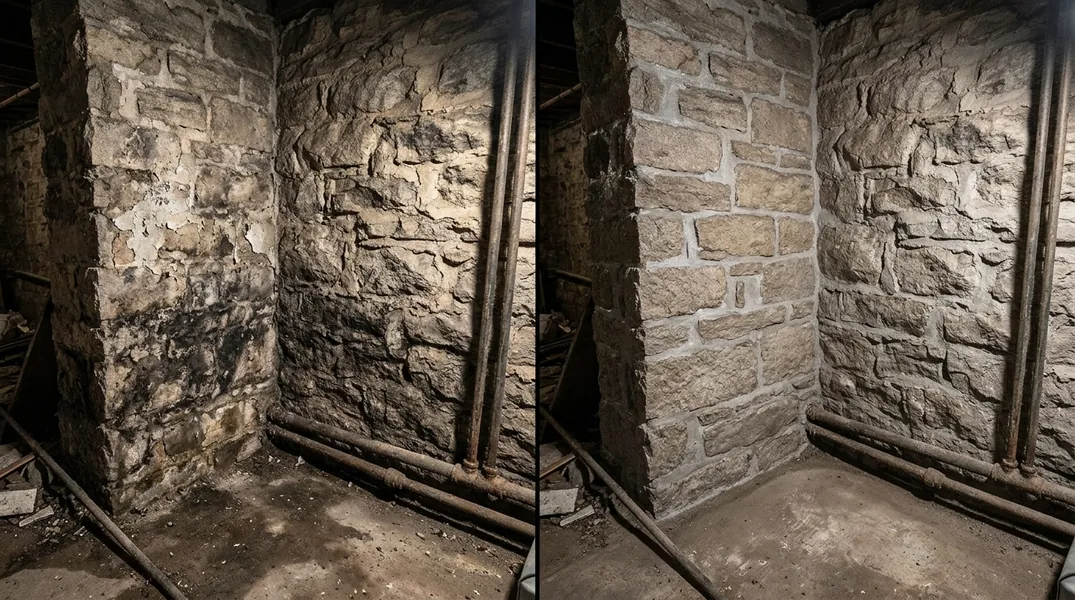
Why Johnson City Basements Face Unique Waterproofing Challenges
Living in Johnson City means enjoying beautiful mountain views and four distinct seasons, but it also means dealing with geology that can be tough on basements. Much of the region sits on karst topography, a landscape formed by the dissolution of soluble rocks like limestone. This creates sinkholes, underground streams, and complex drainage patterns that can send water toward your foundation from unexpected directions. Unlike homeowners in flat, sandy areas, Johnson City residents often face hydrostatic pressure that builds quickly after heavy rain, pushing water through microscopic cracks in concrete block or poured walls.
This local geology is why a one-size-fits-all approach to waterproofing rarely works here. A solution that performs well in a dry climate may fail miserably when the ground is saturated and the water table rises. Understanding the difference between interior and exterior systems, and how each interacts with karst conditions, is the first step toward protecting your home. Whether you are in Jonesborough or closer to downtown, the right strategy depends on your specific foundation, soil conditions, and the source of the water intrusion.
How Interior Drain Tile Systems Work
An Interior Drain Tile System is installed along the inside perimeter of your basement footing. The process involves breaking up a narrow strip of the concrete floor, digging a trench down to the footing, and laying perforated pipe surrounded by gravel. This pipe captures water that seeps through the walls or rises from below and directs it to a sump pump, which then discharges it away from the home. The system is typically covered with new concrete, leaving your basement floor intact and usable. Because it manages water after it enters the basement envelope, it is often the go-to solution for homes where exterior excavation is impractical or would destroy mature landscaping.
Interior systems excel at handling hydrostatic pressure from beneath the slab, a common issue in karst areas where water can percolate upward. They are also less expensive than exterior digs and can be installed year-round, regardless of weather. However, they do not stop water from saturating the soil outside your foundation, which means the walls themselves may still be damp and prone to efflorescence or mold. For many Johnson City homeowners, an interior system is a reliable, cost-effective fix, especially when combined with proper wall vapor barriers and dehumidification.
The Case for Exterior Basement Waterproofing
Exterior Basement Waterproofing takes the opposite approach: it stops water before it ever reaches your walls. This typically involves excavating the soil around the foundation, repairing any cracks, applying a waterproof membrane or coating to the exterior walls, and installing drain tile and gravel at the footing. The goal is to create a barrier and a drainage path that keeps the surrounding soil from becoming saturated against your basement. In areas with steep slopes or heavy clay content, an exterior membrane can be the most effective way to relieve pressure and prevent structural damage over the long term.
Exterior systems are particularly valuable in Johnson City because they address the root cause of many leaks: water pooling against the foundation from uphill runoff or poor surface drainage. By intercepting that water and routing it away, you protect not only the basement but also the foundation walls themselves, reducing the risk of bowing or cracking. The trade-off is cost and disruption. Excavation is labor-intensive, can damage decks, patios, and gardens, and is weather-dependent. For homeowners in Elizabethton or Kingsport with finished basements or valuable landscaping, the decision often comes down to balancing immediate protection with long-term peace of mind.
Drain Tile vs Exterior Membrane: Key Differences
When comparing drain tile vs exterior membrane, it helps to think of them as complementary rather than competing technologies. Drain tile, whether interior or exterior, is about managing water volume and directing it away. An exterior membrane is about creating a physical barrier that prevents water from ever touching the wall. In many Johnson City homes, the ideal solution combines both: an exterior membrane to keep the wall dry, and drain tile to handle any water that accumulates at the footing. The choice between interior and exterior drain tile then depends on accessibility and budget.
Interior drain tile is generally faster to install and less disruptive to your yard, making it a popular choice for existing homes where the basement is unfinished or where exterior access is limited. Exterior drain tile, installed as part of a full exterior waterproofing project, offers the added benefit of protecting the foundation walls from soil pressure and frost. For homeowners dealing with karst basement leaks, where water can appear from multiple points and shift over time, a combination approach often provides the most robust defense. A professional assessment is essential to determine which combination makes sense for your property.
Basement Waterproofing Cost in Johnson City: What to Budget
Understanding pricing is a critical part of your decision. Interior drain tile systems are typically less expensive upfront because they require less excavation and can be completed in a few days. Exterior waterproofing costs more due to the heavy equipment, labor, and restoration involved, but it can add value by protecting the foundation itself. Factors that influence cost include the length of the perimeter, the severity of the water problem, whether a sump pump is needed, and the condition of your walls. Homes with finished basements may also require additional prep and restoration work.
It is important to get a detailed, written free estimate that explains exactly what is included, from permits to cleanup. Beware of quotes that seem too low; they often skip crucial steps like gravel backfill or proper membrane sealing. A reputable contractor will also discuss warranty terms and maintenance. For a personalized assessment of your Johnson City home, call Johnson City Waterproofing at (423) 427-2632. We can evaluate your foundation, explain your options, and help you choose the system that delivers the best long-term value.
Foundation Waterproofing Near Me: When to Call a Pro
If you have noticed damp spots, musty odors, or visible cracks in your basement walls, it is time to call a professional. Foundation Waterproofing is not a DIY project, especially in karst terrain where the water source can be difficult to trace. A trained eye can identify whether the issue is hydrostatic pressure, poor grading, a failed sump pump, or a combination of factors. Attempting to patch cracks from the inside without addressing the underlying water management often leads to recurring problems and wasted money.
Johnson City Waterproofing specializes in diagnosing and solving basement water issues for homeowners across the region. We understand the local soil, the seasonal rainfall patterns, and the unique challenges posed by karst geology. Whether you need a simple interior drain tile system or a full exterior membrane installation, we will give you an honest assessment and a clear plan. Do not wait for a small leak to become a major structural problem. Reach out today for a free estimate and take the first step toward a dry, healthy basement.
Looking for a professional basement waterproofing contractor in Johnson City? Johnson City Waterproofing responds fast for all your basement waterproofing needs.
Get a Free QuoteOur services: Basement Waterproofing · Interior Drain Tile System · Exterior Basement Waterproofing